Par Yossi Sheffi, MIT Professor | Supply Chain, Resilience, & Risk Management Expert
Rail shippers should carefully weigh the potential risks and benefits of the Union Pacific’s proposed purchase of the Norfolk Southern.
Currently, there are only six large, Class 1 railroads in the United States and Canada. This is down considerably from earlier days, due to a series of bankruptcies and mergers as well as a change in how the U.S. government defines Class 1 carriers. (Today it is defined as a railroad that generates annual revenues of more than $1 billion.) The number of Class 1 carriers will drop to five if the proposed merger of the Union Pacific and Norfolk Southern railroads goes through.
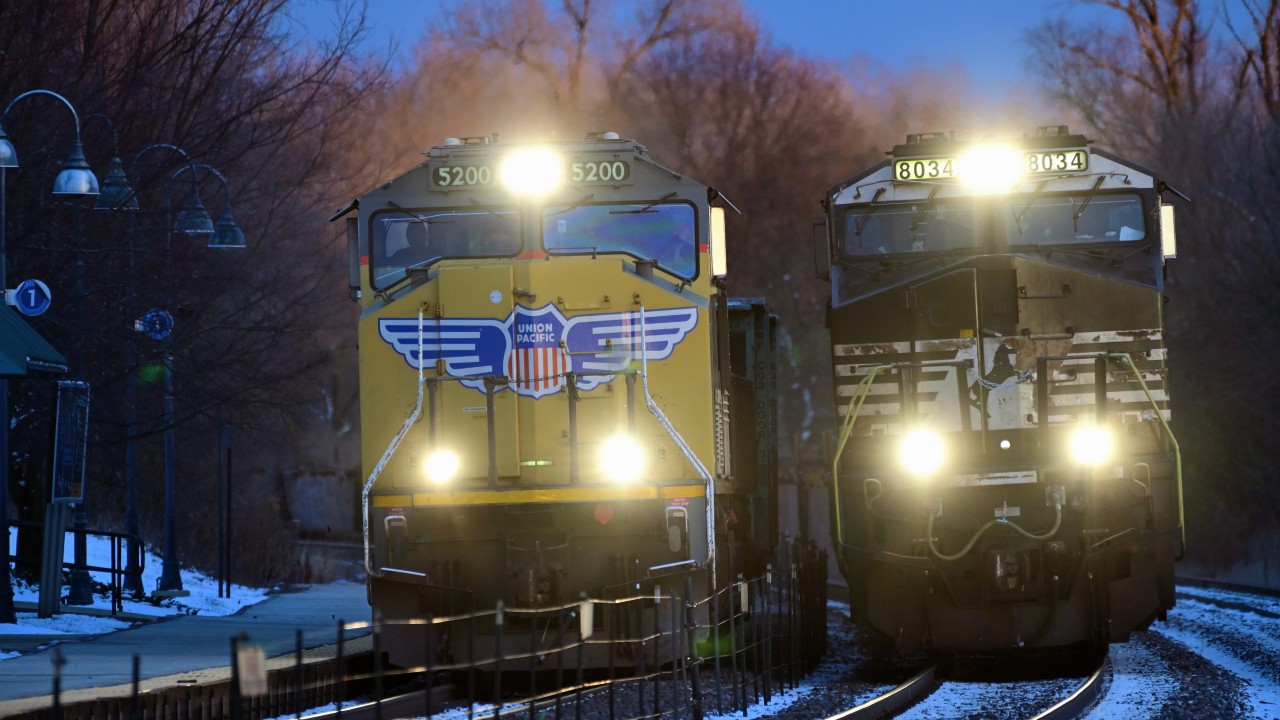
Union Pacific’s $85 billion acquisition of its smaller competitor would create the first true transcontinental railroad in the United States, connecting 50,000 route miles across 43 states, according to UP. This is not a done deal. Although Union Pacific CEO Jim Vena recently told an investors’ conference that he is confident the merger will be approved, UP must convince the Surface Transportation Board that the merger—which some observers estimate would handle two-fifths of U.S. rail freight—will “enhance competition” and “serve the public interest.”
The two companies say their planned merger will do both by offering single-contact service, eliminating interchange delays, opening new routes, expanding intermodal services, and reducing distance and transit time on some corridors. They also make some very big claims, including that the merger will “transform the U.S. supply chain and economy,” strengthen domestic manufacturing, and preserve union jobs while accelerating technological advancements and promoting greater competition.
The proposal has generated support from some rail shippers, ports, and small railroads. It has also sparked a great deal of pushback from other shippers and intermodal providers that are questioning that rosy prediction. Conventional wisdom (not to mention long experience) suggests that consolidation among service providers leads to higher prices, disrupted and deteriorating service, and less competition. This is the argument many shippers are making against the merger.
For example, the National Industrial Transportation League (NITL), which represents shippers, says its members oppose the deal because prior rail mergers have drastically reduced competition in the U.S., leaving many shippers with access to only a single railroad and forcing them to pay higher prices for unreliable and inadequate service. That may have been the case for consolidations of directly competing lines, which obviously reduces competition. The most notorious example is the 1997 merger of rivals Union Pacific and Southern Pacific, which not only reduced competition in the western U.S. but also led to lengthy service disruptions. But in an end-to-end merger of railroads with little or no overlap, such as the current proposal, the opportunities for greater efficiency and expanded service tend to outweigh the potential downsides.
Additionally, some shippers and intermodal marketing companies that currently have contracts with either UP or NS plus a second railroad worry that the merger will force them to drop their second carrier. Shipper groups have also expressed concern that the remaining railroads will be compelled to pursue consolidation as a way to better compete against the combined UP and NS—a vicious cycle that sooner or later is likely to end up further reducing competition.
Consider the Risks and Benefits
The old saying that there are two sides to every argument is certainly true in this case. I would caution against wholesale acceptance of either side’s assertions. Shippers should not take the railroads’ ambitious predictions and assurances at face value. But neither should they assume the worst. There will be changes, and some of them undoubtedly will prove beneficial.
From a risk and resilience standpoint, there is much to think about. What would be the potential risks and rewards of putting all your rail “eggs” in one basket? On the one hand: Are you prepared to withstand temporary service disruptions? If the merger goes forward, will you be capable of adjusting your inventory position, delivery timelines, and/or production schedules to allow for potential delays? Are there alternative services available now, or are they expected in the future? The BNSF, CSX, Canadian National, and Canadian Pacific Kansas City have all said that, rather than pursue mergers, they will focus on interline partnerships that will connect their services and offer shippers more options. This may present some future opportunities for certain shippers.
On the other hand: If service is indeed faster and more efficient, can you take advantage of that to reduce costs and improve service—not just for your own company but for your customers too? Could new services and route enhancements allow you to expand your business?
Whether you expect the merger to be beneficial for your company or not, a careful review of contracts, particularly in regard to pricing, capacity, and equipment availability, is in order.